


Some decisions arrive quietly. Others land with a thud.
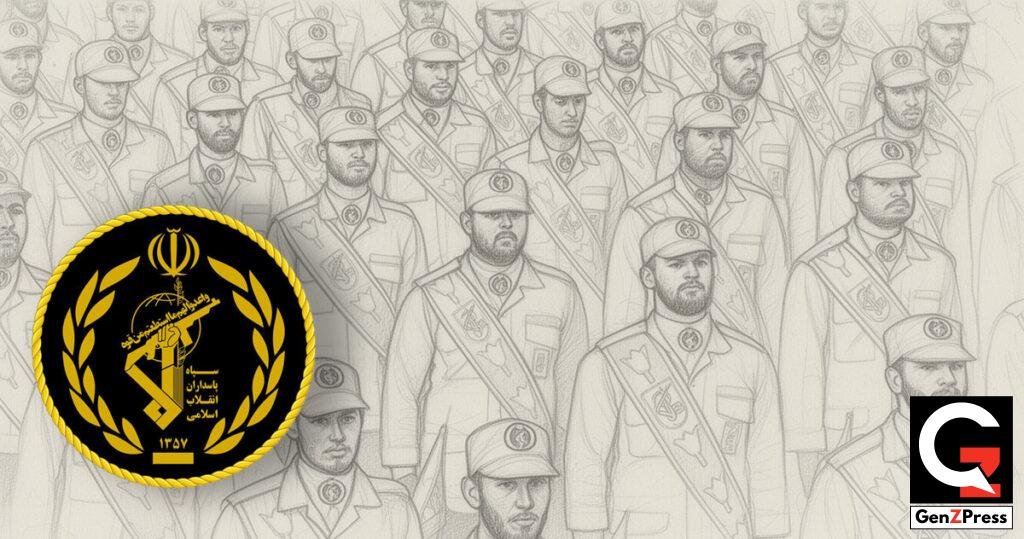
On Thursday in Brussels, EU foreign ministers made one of those heavy decisions: Iran’s Islamic Revolutionary Guard Corps—the IRGC—will be placed on the European Union’s terrorism blacklist. Not symbolic talk. Not diplomatic hedging. A real move, backed by unanimity, and loaded with consequences.
If I’m honest, the timing feels less like a coincidence and more like a breaking point.
For months, European capitals have watched Tehran’s crackdown unfold on screens and in reports—crowds scattered by gunfire, prisons swelling, families searching for names that never appear on official lists. Eventually, the question stopped being whether something should be done and became how long can we pretend otherwise?
The formal legal step will come in the next few days, officials say. But politically? The verdict is already out.
Sanctions, bans, and a message that’s hard to miss
Once the designation takes effect, IRGC members will face frozen assets, travel restrictions, and strict bans on funding. Some of these measures already exist under other EU sanctions, but this move goes further. It changes the tone.
Repression is not something that can simply be ignored. A regime that turns its weapons on its own people is digging its own grave. Nepal has already witnessed this truth, where the voices of Generation Z turned protest into a force that reshaped power itself.
Behind closed doors, the decision wasn’t always guaranteed. France and Spain had hesitated, wary of the diplomatic fallout. Belgium wavered too. Then, suddenly, something shifted midweek. Doubts softened. Positions changed. By Thursday, resistance had melted into agreement.
Sometimes politics moves like chess. Sometimes it moves like an avalanche.
Paris speaks—and demands answers
France’s foreign minister, Jean-Noël Barrot, didn’t mince words either. No more impunity, he said. No more executions. Free the political prisoners. Restore the internet. Stop pretending normality exists.
He also raised a more personal issue: two French nationals, Cécile Kohler and Jacques Paris, still stuck in Iran after years of detention. Technically free, yes—but only within the walls of the French embassy. Freedom with an asterisk.
It’s a strange kind of liberty.
Why the IRGC sits at the center of the storm
The accusations against the IRGC read like a grim inventory:
– orchestrating violent crackdowns on protesters
– supplying weapons to Russia
– firing ballistic missiles toward Israel
– maintaining ties with Hezbollah, Hamas, and the Houthis
The US, Canada, and Australia have already labeled the group a terrorist organization. Germany and the Netherlands have been pushing the EU to follow suit for years.
Now, Europe finally has.
As of today, the EU’s terrorism list includes 22 groups—from Hamas to the PKK. The IRGC joins a club no government wants to be associated with.
Dutch foreign minister David van Weel put it plainly: what’s been done to protesters is intolerable. His Finnish counterpart, Elina Valtonen, went further, calling recent events in Iran “beyond words.”
Sometimes words really do fail.
Numbers that refuse to stay still
According to the Human Rights Activists News Agency, more than 6,100 people have been killed since protests erupted in late December. Ninety-two of them were children.
Other estimates climb far higher.
Time magazine cited Iranian health officials who privately suggested a staggering figure: at least 30,000 deaths.
Which number is accurate?
Hard to say.
But even the lowest count is devastating.
A state within a state
The IRGC didn’t start as a giant.
Founded in 1979 after the Iranian Revolution, it was meant to protect the Islamic Republic from internal threats. Over time, it grew—quietly, steadily—until it became something else entirely. A military force. A political player. An economic powerhouse. Almost a parallel government.
Today, estimates suggest between 125,000 and 190,000 troops, spanning land, sea, and air units, all ultimately loyal to Supreme Leader Ali Khamenei.
A state within a state.
And sometimes, more powerful than the state itself.
Diplomacy on thin ice
Could this blacklist freeze Europe’s diplomatic ties with Tehran? Possibly. But Kallas insists the risks were calculated. Channels with Iran’s foreign ministry, she said, should remain open.
The Dutch view is less cautious. If Iran cuts ties, van Weel argued, it would only harm itself.
“Iran needs to talk now,” he said.
Easy to say. Hard to do.
Europe’s chorus grows louder
European Parliament president Roberta Metsola called the decision “long overdue.” Ursula von der Leyen echoed that sentiment, describing the IRGC in stark terms: a regime that drowns protests in blood deserves the label “terrorist.”
Not exactly subtle diplomacy.
Beyond the blacklist, the EU also approved new sanctions against 21 individuals and entities linked to human rights abuses, plus 10 figures connected to Iran’s support for Russia’s war in Ukraine.
Pressure is piling up—from every direction.
Washington turns up the heat
Meanwhile, across the Atlantic, US President Donald Trump is escalating his own campaign. The USS Abraham Lincoln and several missile destroyers have been deployed to the region. A message, clearly, not just a maneuver.
Trump says he hopes Iran will return to negotiations and accept a deal—no nuclear weapons, fair terms, mutual benefit.
Iran’s response? Less conciliatory. Its UN mission warned that any attack would be met with retaliation.
And so the cycle continues.
Maybe this decision will change something.
Maybe it won’t.
But one thing feels different this time: Europe isn’t whispering anymore. It’s speaking out loud.
And Tehran is definitely listening.

Krishna Paksha Thapa, (with a stage name KanxeY) is an author, artist and a storyteller from Nepal Based in Israel with a passion for design, art and illustration. Discover his artworks, stories, and creative journey at Kanxey.com.
(Blog - www.krishnathapa.com)