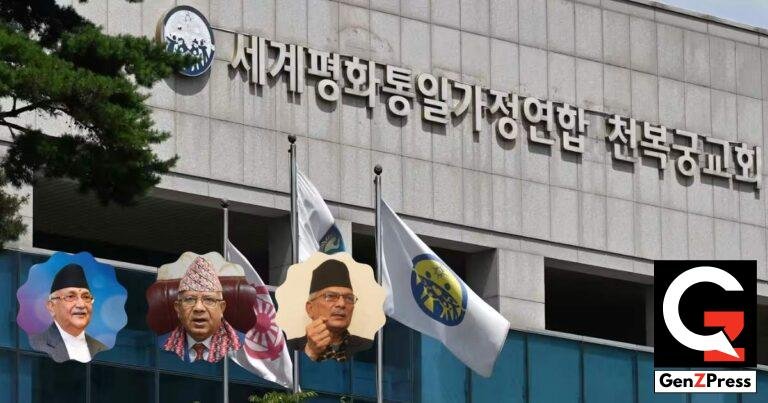






Nepal has reached a point in its history where the time for searching alternatives is over. This is the time to decide. For decades, systems changed, constitutions changed, and faces in power changed, but the lives of ordinary people did not. Carrying the weight of these failures, the old political parties today face a deep political and moral crisis.
From this very crisis, new figures and a new generation have emerged. They are not just challenging old politics, but signaling its replacement. Rabi Lamichhane’s urgency, Balen Shah’s order, Kulman Ghising’s progress, and the speed and technology of the Gen Z generation have become the four main pillars of change in Nepal. Though they may appear separate, their destination is the same: building the nation.
Rabi’s Urgency: Fearless Questions and Political Discomfort
The biggest change Rabi Lamichhane brought into politics is style. He popularized a culture of questioning. “Why not?” is the question that makes old power structures most uncomfortable, and Rabi placed this question at the center of politics.
His urgency is not mere emotional aggression. It is the expression of long-suppressed public anger. Opening files, naming names, demanding answers, and creating pressure, his approach has sent a clear message: politics is no longer a closed-room game.
From a political perspective, old parties find Rabi unsettling because he does not speak the language of power. He speaks the language of the people. As his popularity grows, the old forces appear more aggressive and intolerant. That itself is a sign that change is moving in the right direction.
Balen’s Order: The Law Applies to Everyone
Balen Shah’s rise has raised a fundamental question in Nepal’s administrative politics. Was it truly impossible to enforce the law, or was there simply no will to do so?
The changes seen in Kathmandu Metropolitan City have answered that question. From sidewalks to large structures, he attempted to bring legal order to chaos long driven by access and influence. This is why he has as many critics as supporters. But it is not hard to see that much of the criticism comes from those afraid of change.
Politically, Balen’s message is clear. A country is not run by speeches, but by systems. If this sense of order can expand to the federal, provincial, and local levels, Nepal’s governance culture itself could change.
Kulman’s Progress: Leadership That Speaks Through Results
Kulman Ghising is not directly involved in politics, yet his influence is no weaker than that of politicians. By ending load-shedding, he shattered a long-held myth that nothing can work in Nepal.
His tenure proved that with honest and capable leadership, public institutions do not have to be loss-making burdens. They can become engines of development. Energy self-reliance is not just an economic achievement. It is the rebuilding of national confidence.
A political comment here is unavoidable. If people like Kulman are sidelined due to political interests, it is not just an individual being pushed aside, but the country’s potential itself. Unfortunately, old politics still prioritizes obedience over competence.
Gen Z: A Generation That Rejects Old Politics
Gen Z is not blindly loyal to any party. They question, compare, and seek facts. That is why old-style politics cannot survive in front of this generation.
They understand that speeches do not fill stomachs, slogans do not create jobs, and emotions do not build development. They want results. This is why their attraction to startups, technology, innovation, and self-employment is growing.
Politically, Gen Z is the most dangerous voter bloc because they are not afraid, they do not bend, and they do not believe in compromises without outcomes.
Now They Must Unite: Cooperation, Not Collision
Nepal’s tragedy has always been that when forces seeking change fight each other, the old forces win. This mistake must not be repeated.
Rabi, Balen, and Kulman do not need to be in the same party. But they must think in the same direction. Cooperation on a minimum common agenda such as good governance, employment, education, health, and energy is essential.
The political reality is clear. If the so-called new forces get trapped in ego, rivalry, and personal popularity, the old parties will return to power. This is why coordination, not competition, is needed now.
The Time to Sideline the Old Is Now
This is not an emotional appeal. It is a conclusion based on facts. The public has already evaluated where decades of rule by old parties have taken the country. The excuse of “give us one more chance” is no longer acceptable.
The coming election is not just a voting process. It is an opportunity for political cleansing. This is the moment to push aside old faces, old styles, and old excuses, and bring forward new thinking and new ways of working.
Nepal does not need another movement. It needs implementation. Not another slogan, but plans and results. Rabi’s urgency has given voice, Balen’s order has shown the system, Kulman’s progress has proven what is possible, and Gen Z has given speed.
Now there is only one question. Can these forces come together?
If they do, Nepal will not stop.
If they do not, the old will get another chance.
The historic opportunity to build the nation is here, now. If we fail to decide at this moment, history will not forgive us.

Based in Israel, he highlights the stories and struggles of migrant workers and students, giving voice to the Nepali diaspora. Actively engaged in community initiatives, he uses journalism to raise awareness, foster empathy, and inspire positive change.