




In the quiet hours of early Sunday morning, when most of Kathmandu was still asleep, a political moment quietly took shape—one that may echo loudly in Nepal’s future.
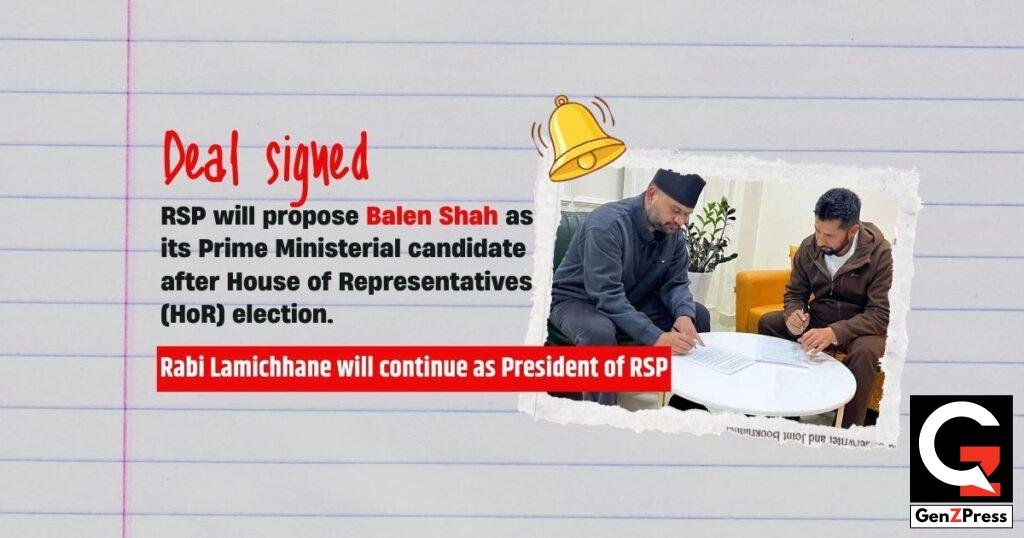
Rastriya Swatantra Party (RSP) President Rabi Lamichhane and Kathmandu Metropolitan City Mayor Balen Shah signed an agreement that signals a major shift in Nepali politics. The deal, finalized around 4 a.m. on Sunday, comes after long discussions that began on Saturday evening and continued through the night.
This agreement is being described by many as a historic political unification—a coming together of two popular figures who represent change, youth energy, and dissatisfaction with traditional politics.
Let’s break down what this agreement means, why it matters, and what could come next, in simple and clear terms.
What Is the Agreement About?
At the heart of the agreement is a bold political promise:
Rastriya Swatantra Party (RSP) will propose Balen Shah as its Prime Ministerial candidate after the upcoming House of Representatives (HoR) election.
This means that if RSP performs strongly in the next general election, Balen Shah could be presented as Nepal’s next Prime Minister, with the full backing of the party.
At the same time:
- Rabi Lamichhane will continue as President of RSP
- The party name, election symbol, and flag will remain unchanged
- The political identity of RSP stays intact, but its reach and leadership vision expand
Rather than forming a new party, this is a broad unification within RSP, bringing Balen Shah and his supporters into the party structure.
Why Is This Such a Big Deal?
Both Rabi Lamichhane and Balen Shah are not traditional politicians in the usual sense.
Rabi Lamichhane
A former journalist turned politician, Rabi Lamichhane rose to national fame for his outspoken style, anti-corruption stance, and direct connection with ordinary citizens. Under his leadership, RSP emerged as a surprise force in Nepal’s recent elections, shaking the dominance of older parties.
Balen Shah
Balen Shah, elected as Kathmandu’s mayor as an independent candidate, became a symbol of urban reform, courage, and action. His bold decisions, technocratic approach, and refusal to bow to political pressure earned him strong support—especially among youth and first-time voters.
Together, they represent:
- Frustration with old political elites
- Desire for clean governance
- Hope for merit-based leadership
- A strong youth-driven political movement
Their unification suggests that Nepal’s alternative political forces are now moving from protest to preparation for power.
Key Points of the Agreement (In Simple Terms)
Here are the most important highlights of the deal:
1. Balen Shah as PM Candidate
After the next House of Representatives election, RSP will officially propose Balen Shah as Prime Minister.
2. RSP Identity Remains
The party will continue under:
- The name Rastriya Swatantra Party
- The same election symbol and flag
- Rabi Lamichhane as party president
This ensures continuity and avoids confusion among voters.
3. Party Structure Will Expand
Although the agreement does not openly detail changes in the central committee, both sides have agreed on an understanding:
- Central committee members from Balen Shah’s side will be added
- Necessary updates will be made at the Election Commission
This makes the unification legally and institutionally valid.
4. Focus on Youth and Experts
The agreement clearly states that the party will expand its organization by bringing in:
- Youth activists
- Experienced professionals
- Technical and policy experts
This signals a shift away from loyalty-based politics toward skill-based leadership.
5. Merit, Inclusion, and Public Image
Appointments within the party will be based on:
- Merit
- Inclusivity
- Clean public image
This clause directly addresses public anger toward nepotism, corruption, and favoritism in Nepali politics.
What Does This Mean for Nepal’s Political Future?
This alliance could reshape Nepal’s political landscape in several important ways.
1. A Strong Youth-Centered Movement
Young voters already feel disconnected from traditional parties. This unification gives them a clear political home and a leadership team they trust.
2. Pressure on Old Parties
Established parties may now face serious pressure to:
- Reform themselves
- Address corruption more seriously
- Engage with young voters honestly
Ignoring this shift could cost them heavily in future elections.
3. From City Leadership to National Vision
Balen Shah has proven himself as a city leader. This agreement opens the door for him to translate urban governance success into national policy leadership.
4. From Media Voice to Political Strategy
Rabi Lamichhane’s strength in communication and public trust complements Balen Shah’s administrative and technical style. Together, they form a balanced political partnership.
Public Reaction So Far
Early reactions suggest:
- Strong enthusiasm among youth
- Active discussions on social media
- Curiosity and concern from traditional political circles
Supporters see this as a fresh wind in stagnant politics, while critics are asking tough questions about experience, ideology, and long-term stability. These debates are natural—and necessary—in a democracy.
Challenges Ahead
Despite the excitement, challenges remain:
- Managing internal party expansion smoothly
- Aligning independent supporters with party discipline
- Turning public trust into electoral success
- Facing resistance from entrenched political interests
Success will depend on how honestly and transparently this alliance moves forward.
A Quiet Morning, A Loud Message
The agreement was signed quietly at dawn, but its message is loud and clear:
🕊️ Nepali politics is changing.
🕊️ New leadership styles are emerging.
🕊️ The youth are no longer waiting—they are organizing.
Whether this alliance becomes a turning point or just another chapter will depend on action, consistency, and courage. But for now, one thing is certain: the political conversation in Nepal has shifted.
And the sun that rose that Sunday morning rose over a country watching closely—hopeful, cautious, and curious about what comes next.

Krishna Paksha Thapa, (with a stage name KanxeY) is an author, artist and a storyteller from Nepal Based in Israel with a passion for design, art and illustration. Discover his artworks, stories, and creative journey at Kanxey.com.
(Blog - www.krishnathapa.com)