




Decoding Gen Z: 7 Unique Characteristics of the Gen Z – The Neo-Digital Natives
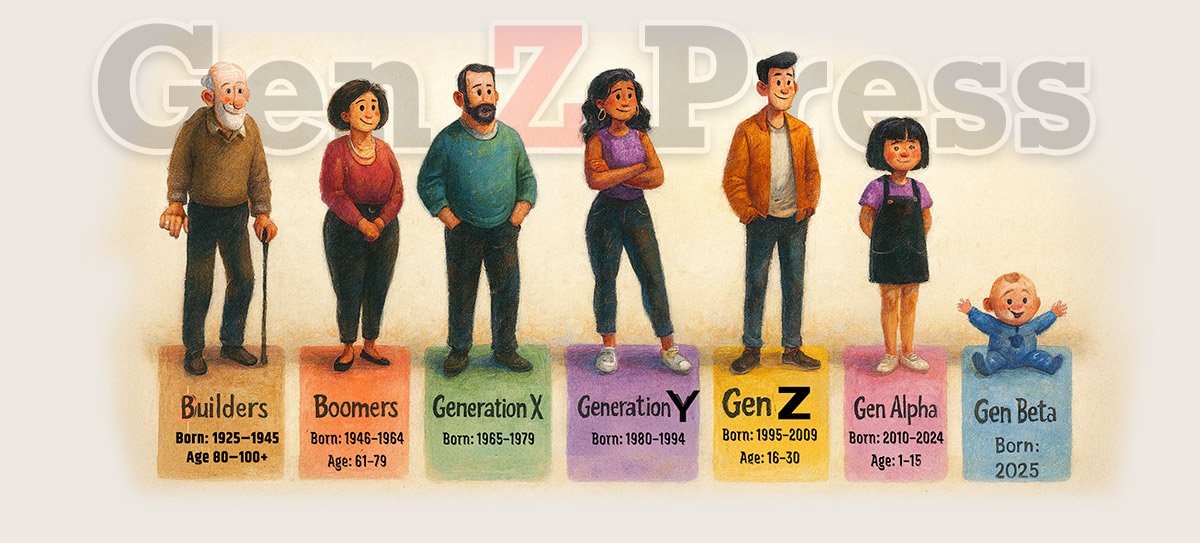
Discussions about generational conflict frequently dominate the news landscape, often focusing on the opposing views of Baby Boomers (born mid-1940s to mid-1960s) and Millennials (born early 1980s to late 1990s). While Boomers are typically wealthier and more conservative, concerned about property values, Millennials are socially liberal and anxious about entering the property market. Generation X sometimes features in these debates, but the youngest cohort, Generation Z, is often overlooked.
Generation Z generally encompasses those born from the mid-1990s to the late 2000s. Because the majority of this generation is still under the age of 18, their political views are seldom analyzed as they cannot yet vote. There is also a common, but mistaken, assumption that Gen Z is similar enough to the older Millennial generation that separate analysis is unnecessary. However, Generation Z is distinctive and fundamentally different from its predecessors, making their unique characteristics essential to understand.
Here are the seven unique characteristics that define Generation Z:
1. True Digital Natives
Generation Z is the first cohort to truly grow up embedded in the digital world. Unlike Millennials, who might vaguely recall dial-up internet and brick-shaped mobile phones, Gen Z has never known life without instant global connection. They possess the inherent knowledge that they can communicate with anyone, anywhere, instantaneously, and they have utilized various social media networks to do this their entire lives.
For Gen Z, electronic devices that were considered luxuries by their parents or older siblings have always been necessities for modern living. Their innate facility with technology has led to them being nicknamed the “neo-digital natives”. This digital experience creates a stark difference from earlier generations. Previous generations witnessed the slow shift from analogue to digital; for example, Millennials transitioned from taping songs off the radio to burning CDs, and then using Bluetooth to transfer files. In contrast, Gen Z has always consumed and shared music digitally. This normalization of extraordinary technological advancements applies to many aspects of life, including maps and party invitations. This early experience may better equip Generation Z to adapt to the huge technological changes they will undoubtedly face as adults.
2. Shaped by Instability and Caution
One key difference separating Millennials and Gen Z is their perception of global safety, specifically whether they remember the events of 9/11. For the oldest members of Gen Z, 9/11 happened when they were too young to remember; for most, it is merely a historical event that occurred before their birth. Massive international terrorism happening in Western countries does not feel new or exceptional to them; they have always lived with it.
This environment explains what might seem like a contradiction: Gen Z is eager to live and work worldwide, yet they are deeply anxious about finding terrorism, conflict, extremism, and war. To them, however, this isn’t contradictory—living with the threat of terrorism is the norm, and they feel just as likely to encounter danger overseas as they are at home.
Furthermore, Gen Z was born during or immediately preceding the 2007 financial crisis and subsequent recession. Their earliest memories may include signs of massive international financial upheaval, such as houses being repossessed and family members losing jobs. This contrasts sharply with Boomers and Millennials, who were born into times of prosperity and typically did not face significant economic downturns until their late teens or beyond. Consequently, Generation Z has a pronounced reputation for caution and frugality compared to preceding generations.
3. Inherently Accepting and Socially Liberal
Generation Z grew up in a world that, alongside becoming more frightening, simultaneously became more accepting. For Gen Z, the fight for gay rights—such as the struggle to repeal Section 28 in the UK, which banned the discussion or promotion of homosexuality in schools—is considered distant history. While Millennials celebrated the gradual introduction of same-sex marriage globally, Gen Z was more often surprised that it had not been legalized everywhere sooner.
For this generation, social tolerance is the default position. Although their politics may lean toward economic conservatism, they view social liberalism as self-evident and are often “horrified” that anyone might think otherwise. This acceptance is reinforced by the fact that Gen Z is an incredibly diverse group. Because their parents met people from across the globe through the internet and cheap travel, Gen Z members are more likely to be mixed race and hold multiple nationalities than earlier generations. They are also more likely to know openly transgender peers. They thrive as a heterogeneous generation.
4. Prioritizing Health and Wellness
Gen Z has benefited significantly from advancements in nutritional understanding, specifically recognizing that excessive sugar—not fat—is the primary harm to health. They have avoided the poor eating habits prevalent among previous generations: the traditional fry-ups of the Baby Boomers, the yo-yo dieting of Generation X, and the sugary frappuccinos favored by Millennials.
While nutrition is an evolving science, Gen Z has grown up with better habits, consistently getting their “five-a-day”. Their primary school lunchboxes featured healthier snacks like nuts and fruit, replacing the chocolate and crisps common in their predecessors’ childhoods. As teenagers, they have continued this healthy trend, exhibiting lower rates of smoking and a higher inclination to abstain entirely from alcohol, rather than just drinking in moderation.
Part of this shift is attributed to their ability to socialize easily online, meaning they spend less time going out to parties compared to older generations. However, it is also highly likely that years of public health campaigns, aimed originally at correcting the poor habits of older generations, have instead helped Gen Z form good habits from the start.
5. Privacy-Conscious but Expecting Personalization
Learning from the digital mistakes of older politicians and public figures who were caught by poorly managed forum comments or social media posts, Generation Z exhibits a keen awareness of the line between public and private online. They understand that on the internet, nothing truly disappears, and posting on social media can be akin to “shouting it on the town square”. As a result, they carefully guard their privacy.
Their privacy concerns explain their preference for platforms that allow them to easily restrict interactions to close friends, or those where they can present a carefully curated image for a wider audience, such as Instagram, over platforms like Facebook.
However, Gen Z’s perspective on privacy is complex. They have grown up expecting that their favorite brands will gather extensive data on them to tailor marketing communications to their specific needs. Unlike older generations who might view this data gathering as an invasion, Gen Z considers it an expected and necessary marketing technique for any company that aims to provide a good customer experience. They expect to keep their communications private, but not their customer preferences. In fact, they may avoid brands that fail to offer them a sufficiently personalized experience.
6. Highly Entrepreneurial and Future-Focused
Growing up amidst financial instability has deeply impacted Generation Z’s career aspirations, making them highly concerned with financial security. They are more realistic than the Millennial generation, who were often encouraged to dream big, seek fulfillment in exciting creative careers, and later faced disillusionment when those goals proved difficult to access.
Gen Z prioritizes establishing financial security. Their primary career ambition is often to become entrepreneurs, building their own businesses and eliminating the need to report to a boss. Leveraging the extensive resources of the internet, they are aware that running a business is hard work, but they are prepared for the effort, seeing it as the most reliable path to financial stability. Their goals are optimistic yet grounded: they aim, for instance, to invent an app that allows them to graduate without debt, rather than focusing on becoming billionaires before age 30. Knowing that they will likely not inherit the financial perks enjoyed by their parents—such as affordable housing and heavily subsidized university education—Gen Z is inclined to prioritize working toward a well-paid career over chasing a “pipe dream”.
7. Blurring the Line Between Childhood and Adulthood
The boundary between childhood and adulthood is highly fluid for Generation Z, much like it was for their predecessors in the 1950s, though in different ways. On one hand, Gen Z delays traditional markers of adulthood. They remain in education until at least age 18, and most proceed to university. Teenage pregnancy rates are expected to be the lowest they have been in a century. Due to growing up in a world perceived as unsafe, they are less likely to have enjoyed the freedom to roam unsupervised, and they are also less likely to own or know how to drive a car.
Conversely, they exhibit adult traits much earlier. Their inherent awareness of online privacy and the internet means that even as young teenagers, they are consciously thinking about their words and communication style, and actively working to establish a personal brand online. Although Generation Z may face relative challenges compared to some earlier cohorts, their strong sense of identity and unwavering determination to succeed are expected to serve them well in navigating the future.
Generation Z is defined by a unique mix of digital fluency, economic caution, social openness, and deep self-awareness. They are not simply younger Millennials; they are a distinct cohort whose experiences growing up amidst global terror and financial recession have forged a generation that is realistic, resilient, and highly motivated to control their own financial destiny. Understanding these seven core characteristics is essential for anyone seeking to engage with this complex and influential generation.

Gen Z Press delivers trusted and timely global news for the new generation. We bring you world updates, Gen Z trends, entertainment, lifestyle, and digital culture with clarity, simplicity, and accuracy. Stay informed, inspired, and connected with Gen Z Press — your reliable destination for global news and youth-driven stories.
We welcome your opinions at ✉️ letters@genzpress.com