




Nepal’s presence in the global space arena is rising faster than ever. A major breakthrough came with the successful deployment of a new national satellite—an achievement that goes beyond data collection and aims to support education, research, and solutions to real environmental challenges. At the heart of this momentum is Antarikchya Pratisthan Nepal (APN), a non-profit dedicated to advancing space education and strengthening Nepal’s growing space industry.
A Milestone Launch: Slippers 2 Sat (S2S)
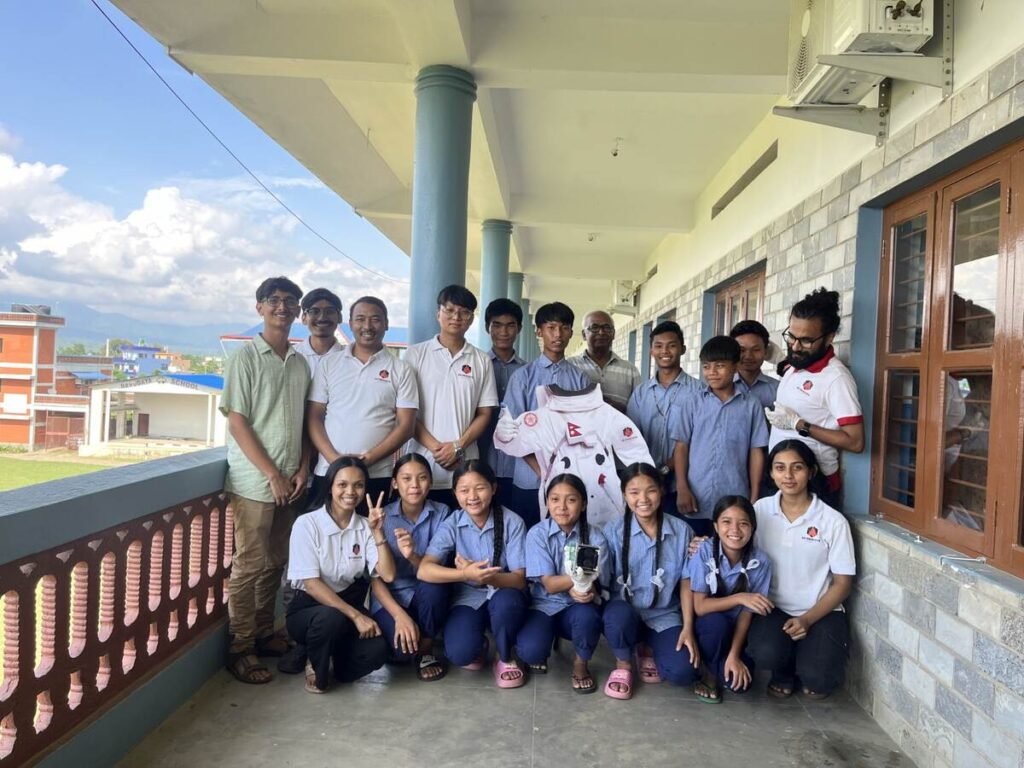
Slippers2Sat, a 1U CubeSat designed and developed by middle-school students from Nepal’s Chepang community, was successfully launched carried into orbit by China’s Kinetica 1 rocket at 10:01 AM NST on a Wednesday. —a moment that felt incredibly rewarding for all of us at APN. Seeing a satellite built by young students, under the guidance of our engineers, finally reach orbit was truly inspiring.
The satellite had already completed a remarkable journey long before liftoff. What started as an idea in Chitwan moved to manufacturing in China, assembly in Nepal, testing in India, further testing in China, and ultimately arrived at the Jiuquan Satellite Launch Center for launch. Throughout this process, the students learned, ideated, developed, and even helped test the satellite they created. We were extremely proud of the nine hardworking students and the six engineers who brought this mission to life—a true journey from slippers to satellite.
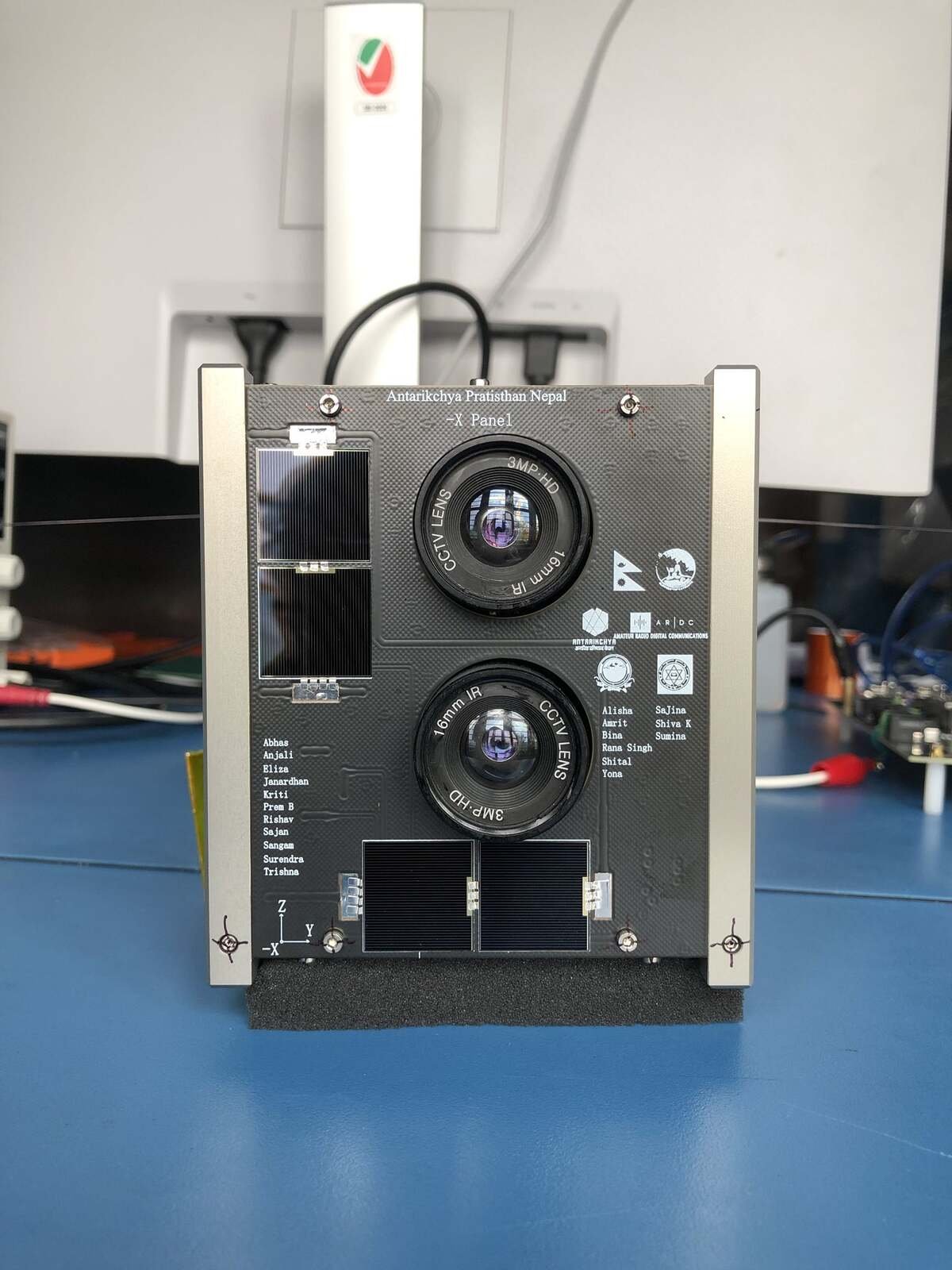
Beyond its incredible story, Slippers2Sat also carried a meaningful technical purpose. Built under Antarikchya Pratisthan Nepal with support from ARDC, the mission taught lower-secondary students the fundamentals of satellite engineering while contributing to Nepal’s expanding space heritage. S2S hosted student-built VIS and NIR cameras for Earth imaging, a software-based amateur-radio digipeater, and a compact Quad-Mag payload for studying ELF and ULF magnetic disturbances. Its mission was supported by a magnetorquer-based ADCS and UHF uplink/downlink system—forming a fully functional CubeSat shaped by both innovation and learning.
And that is what made Slippers2Sat truly special: it was a satellite created by the youth of a marginalized community, carrying missions designed to benefit that very community. From communication support to Earth imaging, from attitude-control training to early studies of earthquake-precursor signals, the mission uplifted, educated, and gave back—completing a powerful circle of impact for Nepal’s scientific future.
S2S holds a special place in Nepal’s scientific history as Nepal’s First Middle-School Nano-Satellite Project. Weighing just 1.2 kg, this 1U CubeSat was developed under APN with crucial financial support from Amateur Radio Digital Communications (ARDC).
The mission is designed with clear purpose:
- Environmental Monitoring: Two onboard cameras capture data on vegetation, water resources, and other vital environmental elements across Nepal.
- Early Warning Research: The satellite supports ongoing studies on earthquake early-warning systems.
- Community Participation: The project proudly included students from the Chepang community in Chitwan, introducing them to space science and amateur radio systems.
The satellite is expected to operate for at least 1.5 years in orbit.
Antarikchya Pratisthan Nepal and Vision 2050
APN stands at the center of these achievements. Driven by a team of award-winning Nepali scientists and educators, the organization is guided by Vision 2050, an ambitious roadmap to make Nepal a meaningful contributor to the global space economy.
APN’s mission focuses on three major goals:
- Training Future Leaders: Building a strong generation of space thinkers, designers, and innovators who can apply space-based tools to solve problems on Earth.
- Educating the Public: Promoting nationwide awareness about space technology and its relevance to everyday life.
- Sending a Nepali to Space: Working with government bodies and global partners to prepare Nepal for its long-term dream—sending its first astronaut by 2050. APN views satellite systems as the essential first step toward that vision.
To make this possible, APN regularly conducts short and long Space BootCamps, STEM workshops, satellite-building trainings, and E-Cube programs. Since 2021, these initiatives have reached students from grade 6 to undergraduate level, boosting curiosity and confidence in space engineering. The organization is equally active in research, development, and collaboration with national and international academic institutions.
Educational Projects Leading the Way
Munal: Nepal’s First High-School Satellite
Another remarkable initiative is Munal, formally recognized as Nepal’s First High-School Nano-Satellite. This 1U CubeSat is being built by students from public and government schools, trained at the Space Systems Laboratory inside Kathmandu University High School.
The project is currently in progress, with a launch planned for mid-2025. In the long run, APN aims to create Nepal’s first high-school satellite constellation—a groundbreaking step for youth-led aerospace education.
International Collaborations Expanding Nepal’s Reach
APN is deepening global partnerships through major missions:
- PHI-1 Project: APN is developing a payload for a 12U CubeSat under a project led by the UN Office for Outer Space Affairs (UNOOSA) and the UAE’s MBRSC. The satellite is scheduled for launch in 2025, with APN working alongside the National Space Science Agency of Bahrain.
- Danfe Space Mission: Part of Thailand’s MPCP 3U Satellite Project, this mission focuses on developing a System-on-Chip satellite system aimed at improving both hardware and software efficiency for the Multi Payload Cubesat Platform.
Tools, Research, and Earth-Focused Solutions
To make space science accessible and practical, APN has built several educational and research tools:
- E-Cube: A hands-on, non-flight model of a nano-satellite designed to teach students the fundamentals of satellite systems.
- SastoCube: An affordable educational satellite model offering a complete end-to-end simulation of a CubeSat ecosystem.
- Space-Enabled Urban Solutions in Nepal (SUSN): A project using AI-powered, space-based tools to help Kathmandu Metropolitan City address pressing urban challenges.
- Glacial Lake Monitoring: APN has installed ground stations near remote glacial lakes to monitor environmental changes and help forecast potential GLOF events.
- Children’s Literature: The illustrated book “The Young Satellite,” inspired by NepalSat-1, introduces young readers to the world of space science.
A New Era for Nepal
Nepal’s growing space journey—powered by youth-driven satellites like Slippers 2 Sat and the long-term vision of Antarikchya Pratisthan Nepal—proves something powerful: you don’t have to be a big country to make a big impact in science and technology.
With imagination, training, and opportunity, even a small nation can prepare its youth to look upward—and build solutions that make life better here on Earth.

Gen Z Press delivers trusted and timely global news for the new generation. We bring you world updates, Gen Z trends, entertainment, lifestyle, and digital culture with clarity, simplicity, and accuracy. Stay informed, inspired, and connected with Gen Z Press — your reliable destination for global news and youth-driven stories.
We welcome your opinions at ✉️ letters@genzpress.com