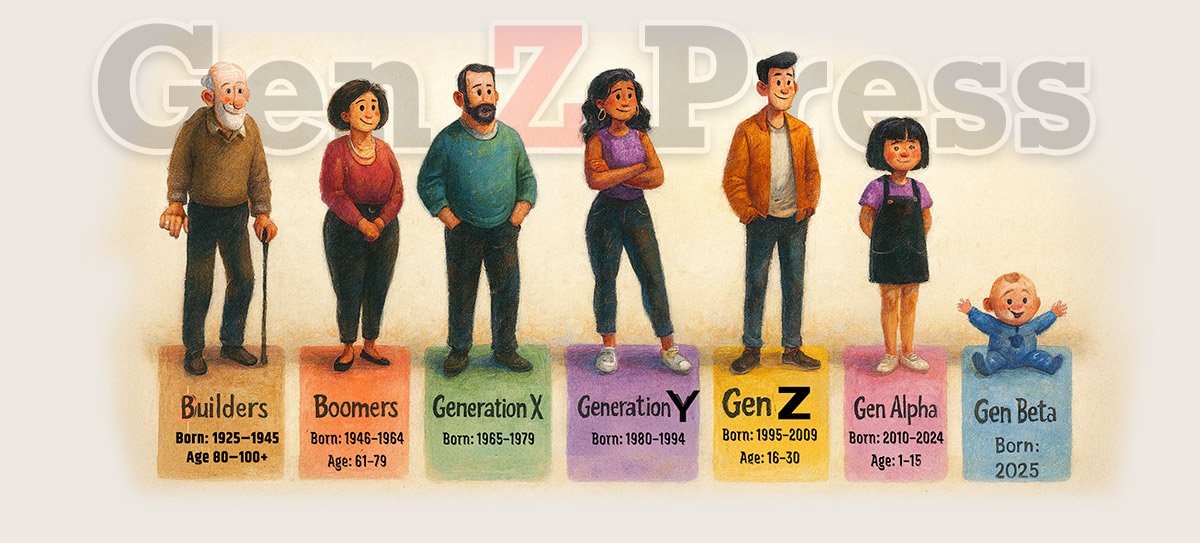






Are we all guilty of doomscrolling through short-form content? According to recent investigations into digital habits, the answer is often yes. While losing track of time scrolling through platforms like TikTok and Instagram Reels is a common modern experience, researchers and students are asking a crucial question: Is this behavior becoming the defining—and perhaps negative—habit of Generation Z?.
This deep dive explores the psychological reasons behind the scroll, the real-world impact on young people, and why social media, despite its acknowledged downsides, remains an indispensable tool for the youngest working generation.
Why We Can’t Look Away: The Science of the Scroll
Many people, especially those under 30 (Gen Z), find themselves losing more time than they would like to admit consuming short-form content. This habit, which University student Greta Gustafsson describes as “addictive scrolling,” often interferes with everyday life and prioritizing important tasks. For many, the scroll offers a form of escapism.
But the enjoyment factor only tells part of the story; there is a biological reward mechanism at play. Dr. Elvira Bolat, an associate professor in digital marketing, explains that engaging with short-form content triggers a powerful reaction in the brain.
The Dopamine Hit:
When we consume entertaining content quickly, our brain releases dopamine, which acts as a reward system. Because the entertainment is delivered so rapidly, the brain becomes conditioned to seek this quick reward more and more frequently. This conditioning leads users to continue scrolling endlessly, resulting in them losing track of time.
Dr. Karen Mansfield, a Postdoctoral Researcher at the Oxford Internet Institute, agrees that consuming short-form content can easily morph into a bad habit. She notes that humans are “creatures of habit,” meaning if we perform an action frequently, we are likely to continue doing it.
The Reality of Digital Immersion
For university students, managing time in the face of ever-present digital distractions is a significant challenge. Greta Gustafsson noted that during lectures, students are often seen picking up their phones every five to ten minutes. Despite attempting to control the habit in a “sensible manner,” the pull of the content remains strong.
Another Bournemouth University student, Zak Travess, who is also a content creator with over 300,000 followers, understands this dynamic well. Even as someone who creates the content others watch, he admits that social media sometimes interferes with his life. When taking a break from university work, he can easily scroll on TikTok and lose time without realizing it.
However, not everyone finds short-form content debilitating. Hannah Clubley, also a student at Bournemouth, describes herself as a disciplined person and does not feel “caught up in” the endless scrolling. While she occasionally indulges in an “extra five minutes scrolling,” she doesn’t believe it has caused her to lose hours of time.
The Double-Edged Sword: Mental Health and Social Validation
Beyond simply losing time, the deep immersion in social media, particularly for Gen Z, presents complex mental health challenges, though it also offers significant support.
The Negative Impacts: Toxicity and Comparison
Samara, a Young Minds Activist, highlighted the intense “balancing act” involved in seeking the dopamine hit from scrolling while simultaneously dealing with negative comparisons. Social media often exposes young people to influencers “living this life” that creates an expectation they feel pressured to live up to. This curated perfection can distort reality and contribute to self-esteem issues and social pressure.
Furthermore, Samara emphasized that social media can be “quite toxic”. They stressed the need for more social communities and places where people can genuinely gather, rather than digital environments that foster toxic culture.
The Positive Impacts: Community and Career
Despite the undeniable cons, the positive aspects of social media, in the view of content creators like Zak Travess, usually outweigh the negative. For Gen Z, social media is far more than a superficial pastime; it is viewed as an essential extension of reality.
Social media platforms are utilized as:
- A Classroom: They provide educational content, skill-building videos, and news updates, blending entertainment and learning.
- A Public Square: Digital spaces foster friendships, community, and activism, creating a sense of belonging.
- A Career Path: Social media has evolved into a viable tool for income generation, with users pursuing careers as digital marketers, influencers, and content creators.
Gen Z lives in an algorithm-driven world. Unlike previous generations that consumed uniform content from traditional media (TV, newspapers), Gen Z’s experience is highly personalized. Platforms like TikTok tailor the “For You Page” (FYP) to hyper-specific individual interests, making the experience feel uniquely personal and indispensable.
The Generational Divide: Obsession or Evolution?
Older generations often perceive Gen Z’s deep digital engagement as an “obsession” because they view it through the lens of traditional media consumption and established career paths. However, many argue that Gen Z is simply adapting to the natural evolution of human interaction, learning, and expression using the tools available to them.
The platforms are intentionally designed to maximize engagement, fostering an environment where participation feels mandatory, driven by the Fear of Missing Out (FOMO) and the need for social validation (likes, shares, comments). Yet, Gen Z is notably self-aware of these traps; they actively critique the platforms and comparison culture even while remaining deeply immersed.
Ultimately, the key disconnect stems from the older generation sometimes viewing their traditional path as the only valid one. Rather than labeling the behavior as “obsessed,” it is more productive for older generations to understand social media as a multifaceted tool for learning, networking, entertainment, and income generation for Gen Z.
Dispelling the Myth of ‘Brain Rot’
In the public discourse about the negative impacts of short-form content, the term “brain rot” is often used. However, experts advise caution regarding this popular, yet unproven, term.
Dr. Karen Mansfield, when asked if “brain rot” is a real outcome of short-form content consumption, stated, “Honestly no”. She clarified that “brain rot” is a popular term used to describe perceived negative impacts of social media on young people. However, “there’s no evidence to suggest that consumption of social media in general has a negative impact on our brains”.
Conclusion: Finding Balance in a Digital Future
It is clear that short-form content, and the resulting phenomenon of doomscrolling, is here to stay. Whether the behavior is driven by a bad habit, boredom, a desire for a dopamine hit, or simple enjoyment, the impact of these platforms is profound.
While researchers know this content can become a bad habit, more research is still urgently needed to fully understand which specific types of content are most likely to make it difficult for young people to put their phones down and control their behavior.
Gen Z’s relationship with their screens is complex, characterized by both critique and dependency. The challenge for society is not to dismiss social media, but to learn how to engage with it in a balanced and thoughtful way, fostering positive digital citizenship for all generations.
Analogy: Thinking of Gen Z’s relationship with social media is like observing a sophisticated, custom-built power tool. It is incredibly efficient and necessary for modern life (learning, work, connection), delivering quick bursts of energy (dopamine hits). If handled improperly or overused, it can cause harm (mental health issues, loss of time). But to label the user as merely “obsessed” is to ignore the crucial, multifaceted purposes for which the tool was built and the highly personalized results it delivers.

Gen Z Press delivers trusted and timely global news for the new generation. We bring you world updates, Gen Z trends, entertainment, lifestyle, and digital culture with clarity, simplicity, and accuracy. Stay informed, inspired, and connected with Gen Z Press — your reliable destination for global news and youth-driven stories.
We welcome your opinions at ✉️ letters@genzpress.com