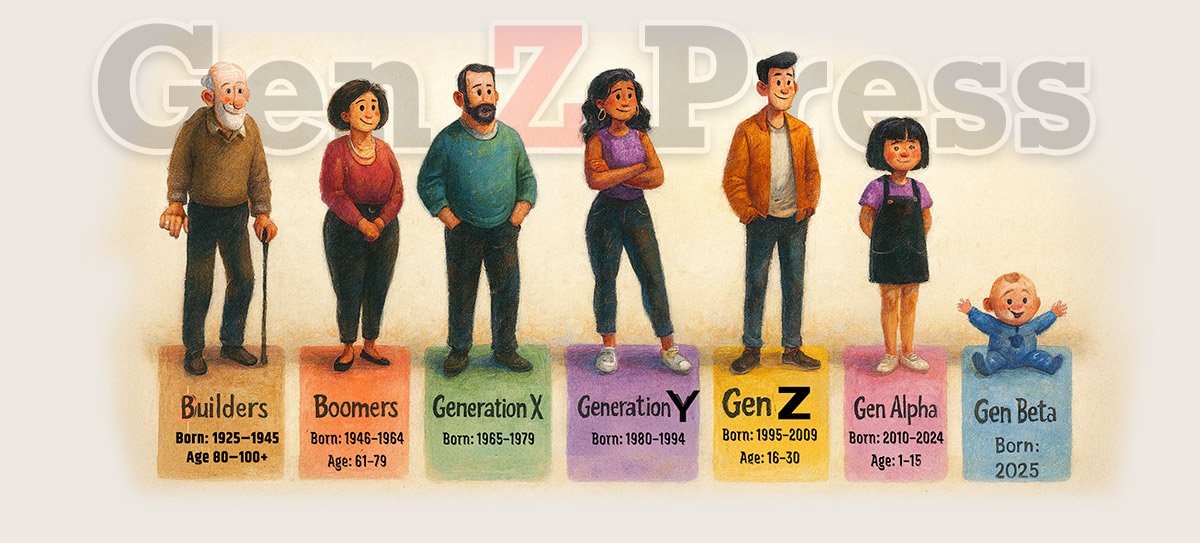






Artificial Intelligence (AI) is no longer a distant futuristic concept; it is the fundamental infrastructure shaping the minds of today’s youth, specifically Generation Alpha (born 2010–2024) and the younger segment of Generation Z (born 1995–2009).
This monumental shift is visible even in small, symbolic moments. Where a child once asked a parent about the honesty of Santa Claus, today they might turn to Siri. The response delivered by the machine is not laden with hesitation or warmth, but with algorithmic precision, collapsing a myth almost instantly. AI has transcended its status as a neutral tool; it is becoming an unquestioned authority, a source of truth, and, critically, sometimes even a surrogate parent in children’s lives.
As AI infiltrates every aspect of childhood—from education and entertainment to the very formation of identity and decision-making—a pivotal question arises: Are we actively shaping this technology, or is it now irreversibly shaping us?.
From Television to ChatGPT: The Escalating Stakes of Technology
History confirms that every new wave of technology redefines the developmental landscape for youth. In the 1950s, it was the mass adoption of television. In the early 2000s, the internet and social media swept through Gen Z’s adolescence, frequently without adequate adult guidance. This resulted in a generation that is both hyperconnected and, paradoxically, hyper-anxious.
AI, however, represents a significant escalation. It is faster, more personalized, and profoundly more innovative than previous tools. Unlike the internet, which primarily delivered content, AI doesn’t just influence behavior; it interprets, predicts, decides, and fundamentally molds cognition. Many adults, educators, and institutions are struggling to catch up, often unsure how to effectively guide the next generation through this complex technological ecosystem.
A Generation Raised by Recommendation Engines
Today’s children are growing up under the supervision of what can be described as algorithmic nannies. Whether it’s the autoplay feature on YouTube, the curated ‘For You page’ on TikTok, answers provided by Alexa, or assistance with homework via ChatGPT, AI actively determines how children learn, what content they consume, and even who they perceive themselves to be.
The algorithm functions by reinforcing identity. For example, a teenager who interacts with gaming videos will quickly have their feed flooded with similar content, leading their sense of self to slowly form around the material the algorithm consistently serves. This is not simply responding to preference; it is actively curating and reinforcing nascent identities.
The influence of these algorithms is staggering. A 2024 European study revealed that over 68% of teenagers reported their interests and online identities were shaped more by algorithms than by input from friends or family. AI, therefore, is not a neutral mirror; it is a looking glass that subtly distorts, heavily curates, and powerfully amplifies specific parts of a child’s world.
The Dual Edge of Personalized Education
The integration of AI into education brings revolutionary potential. Platforms like Duolingo, Khan Academy, and ScribeSense offer highly tailored learning experiences. This personalization is especially beneficial for children facing learning difficulties or neurodiverse needs, as AI can efficiently identify knowledge gaps, adapt lessons dynamically, and boost student engagement.
However, this convenience introduces substantial risks. An over-dependence on AI tools, where the answer is always merely a prompt away, can significantly reduce necessary cognitive effort and actively discourage critical thinking. The fundamental skill of learning to “wrestle with uncertainty” may be lost if every challenge is immediately solved by a machine.
To harness the power of AI responsibly, AI literacy is crucial. An academic review conducted by Singh and Vasishta in 2024 emphasized that students who are trained to critically evaluate AI-generated answers demonstrate better overall performance and retain knowledge for longer periods. Without this critical literacy, AI risks transforming from an empowering learning tool into a debilitating learning crutch.
The Crisis of Attention and Unreflective Minds
The continuous acceleration of content delivery driven by AI is exacerbating existing cognitive challenges. Gen Z already consumes over 34GB of data per day, and this figure is expected to rise dramatically for Gen Alpha.
The impact of this velocity is “clip thinking”—a pattern of rapid, superficial information processing. The brain is conditioned to quickly scan, select, and move on, leaving little space or time for deep reflection. AI sharpens this habit by curating content designed to delight and instantly engage, but which rarely challenges the mind. According to educational psychologist Chardonnens, the collective risk is that “We risk producing efficient but unreflective minds”.
Bridging the Generational Gap with Dialogue
A growing disconnect threatens to undermine responsible AI integration. Children intuitively embrace and adapt to AI systems, while many adults—including parents and educators—remain skeptical, uninformed, or simply struggling to keep pace.
This gap manifests in tangible classroom tension, where students rely on AI for assistance while teachers fear widespread plagiarism. At home, parents often struggle to comprehend how invisible algorithms are fundamentally shaping their children’s worldviews. Vinichenko’s 2024 cross-European survey confirms that this generational AI gap is rooted as much in mindset differences as in technological skill.
The only effective solution is intergenerational AI dialogue. Schools and families must commit to learning together, focusing not just on the mechanics of how AI operates, but on its pervasive influence on thought, emotion, and ethical reasoning.
The Path Forward: From Reactivity to Responsibility
To ensure the future generation maintains its autonomy and humanity, we must proactively ask the hard ethical questions:
- Should a specialized chatbot be authorized to help a child navigate emotional trauma?
- Does an algorithm possess the necessary wisdom to decide what is truly “relevant” for a 10-year-old to learn?
- In the age of hyper-personalization, where does a child’s autonomy truly begin, and where does algorithmic suggestion end?
Without clear answers, we risk raising a generation that is optimized for efficiency but lacking in reflection, and one that is informed by data but ultimately unwise.
It is imperative that society moves from the passive adoption of new technology to the proactive, ethical design of our children’s digital world. This responsibility requires several critical steps:
- AI Literacy in Schools: Education must pivot from teaching children merely how to use AI tools, to equipping them with the critical thinking skills necessary to critique AI-generated outcomes.
- Algorithm Transparency: Push technology platforms to clearly explain how and why their recommendation feeds are shaped the way they are.
- Human-First Design: Educational and entertainment interfaces must center on values that AI inherently struggles with, such as emotional intelligence, patience, serendipity, and focus.
- Digital Detox: Actively promote and prioritize real-world experiences that are unpredictable, cannot be personalized, and rely on human interaction and genuine exploration.
AI is not an enemy to be fought; it is the next essential evolutionary layer of human culture. To raise a healthy AI generation, we must lead with profound awareness, clear ethics, and genuine empathy. As these powerful systems continue to listen to and learn from us, we must first ensure we are listening intently to the unique needs—and vulnerabilities—of our children.
The stakes are higher than mere technological fluency. What is ultimately at risk is the soul of the next generation’s humanity.

Gen Z Press delivers trusted and timely global news for the new generation. We bring you world updates, Gen Z trends, entertainment, lifestyle, and digital culture with clarity, simplicity, and accuracy. Stay informed, inspired, and connected with Gen Z Press — your reliable destination for global news and youth-driven stories.
We welcome your opinions at ✉️ letters@genzpress.com