




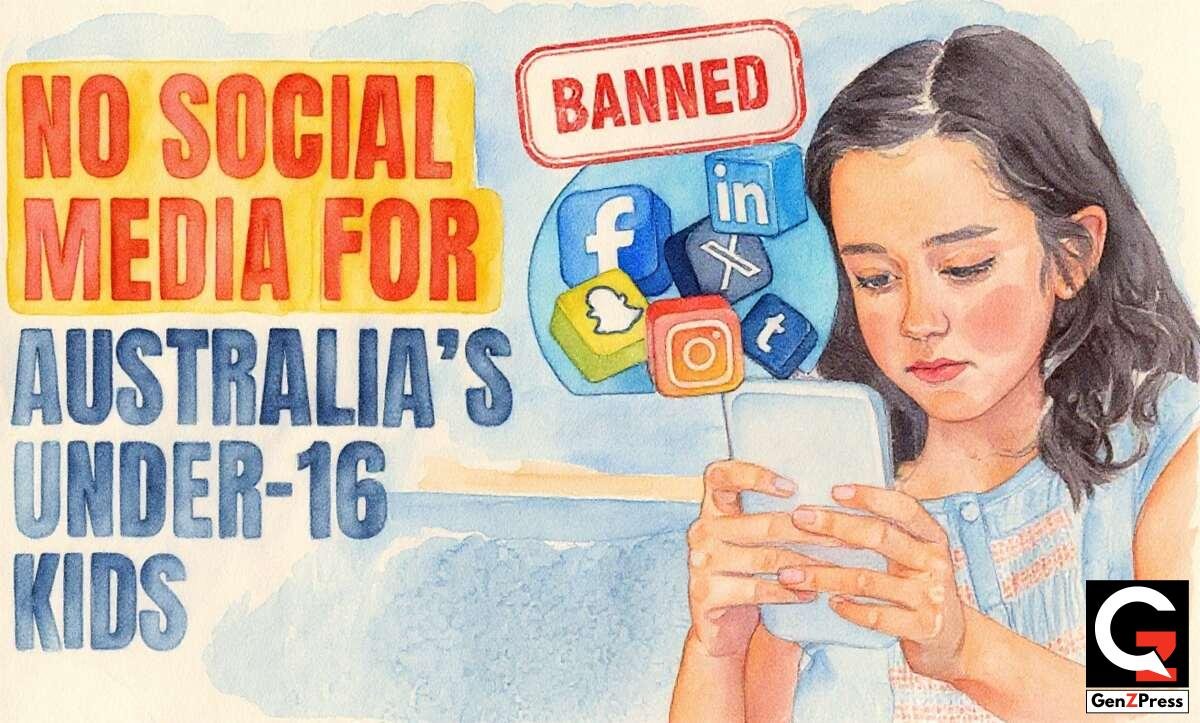
Australia is banning Social Media for teens. It has taken a globally unprecedented step in digital regulation, enacting a sweeping ban on major social media services for children under the age of 16. Effective starting December 10, 2025, this pioneering legislation—which mandates the deactivation of existing profiles and prohibits the creation of new accounts—is being closely watched by nations around the world.
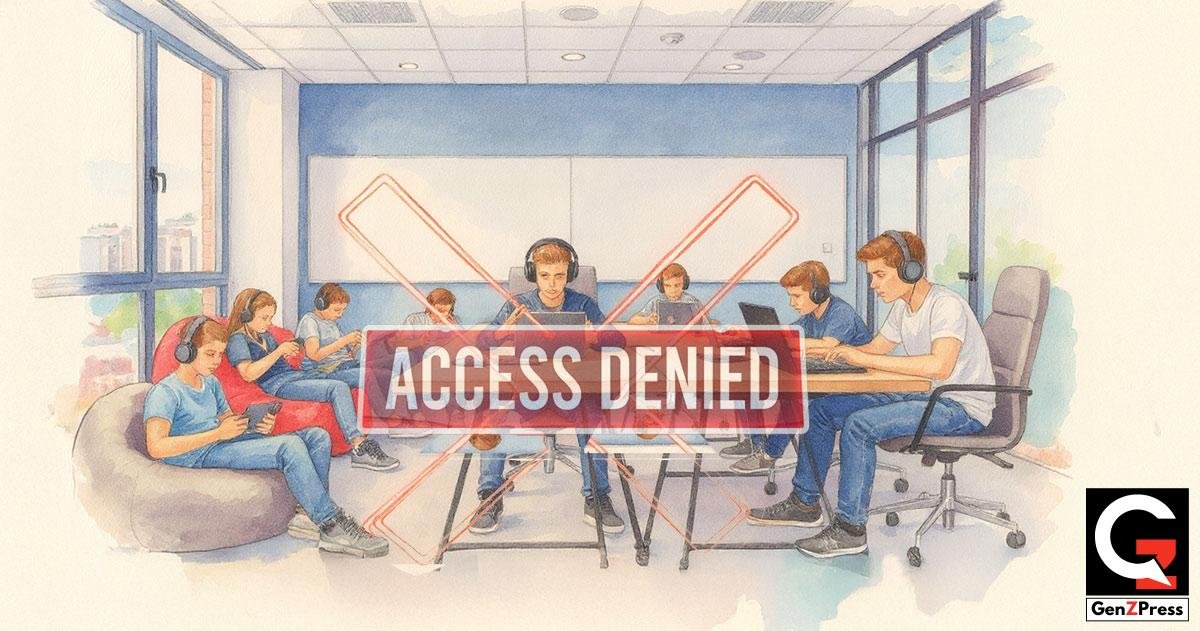
The policy is a culmination of years of intense pressure on tech firms regarding online safety and is rooted in deep concerns about the platforms’ negative impacts on youth mental health and cognitive development.
The Urgent Need for Action: Digital Harm and Adolescent Health
The Australian government asserts that the ban is necessary to counteract social media’s inherent “design features” that intentionally encourage young people to maximize screen time. Simultaneously, the ban aims to shield minors from harmful content that poses a risk to their health and wellbeing.
A government-commissioned study conducted in 2025 underscored the severity of the issue:
- Widespread Usage and Harm: An alarming 96% of children aged 10 to 15 were found to use social media.
- Exposure to Harmful Material: Seven out of every ten children in that age group had been exposed to damaging content, including material promoting suicide and eating disorders, as well as violent and misogynistic material.
- Cyberbullying and Grooming: More than half of the young users surveyed reported being victims of cyberbullying, and one in seven reported experiencing grooming-type behavior from older children or adults.
 Social Media and the Rise of Inattentiveness
The Australian regulatory response aligns with recent scientific findings connecting specific digital habits to detrimental cognitive effects in adolescents.
Research examining the digital habits of over 8,000 teenagers aged 10 to 14 specifically investigated the link between screen time and long-term changes in the core symptoms of Attention Deficit Hyperactivity Disorder (ADHD), namely inattentiveness and hyperactivity. The study categorized digital usage into three areas: gaming, TV/video, and social media (including TikTok, Instagram, Snapchat, X, Messenger, and Facebook).
The key finding was striking: Only social media use was connected to a gradual increase in inattentiveness. This trend persisted even when accounting for genetic risk factors for ADHD and family income.
Researchers rejected the idea that all digital media causes a generic “dopamine hit” that ruins concentration, noting that gaming and video consumption did not show the same negative correlation. Instead, they suggest that social media constantly generates “persistent distraction,” which actively interrupts a young person’s ability to focus. In contrast, gaming often demands sustained attention for a limited duration.
Although the immediate impact on an individual user may appear minor, researchers project that the collective effect could be immense. With social media use rising from near-zero two decades ago to approximately five hours per day for the average teenager now, the cumulative effect is worrisome. Theoretically, if daily social media use increases by one hour for all teenagers, the prevalence of ADHD problems could rise by about 30%. This shift in usage over the last 15 years may partially explain the reported increase in ADHD diagnoses.
Scope, Platforms, and Enforcement
The ban currently includes ten platforms: Facebook, Instagram, Snapchat, Threads, TikTok, X, YouTube, Reddit, and streaming platforms Kick and Twitch. To be included, platforms must meet three main criteria: having the “significant purpose” of enabling online social interaction, allowing interaction between users, and permitting users to post material. Consequently, platforms like WhatsApp, YouTube Kids, and Google Classroom are not covered.
Crucially, the ban focuses enforcement entirely on the companies, not the users. Children and parents face no punishment for infractions. Instead, social media firms face severe financial penalties, with fines reaching up to A$49.5 million (approximately US$32 million) for repeated or serious breaches.
To avoid these fines, companies must implement “reasonable steps” using multiple age assurance technologies. Relying solely on a user self-certifying their age or a parent vouching for their child is prohibited. Acceptable assurance methods include government IDs, video selfies, face or voice recognition, or “age inference,” which analyzes a user’s online behavior to estimate their age. Meta began closing teen accounts in early December, requiring verification via government ID or video selfie to prove age.
Challenges and Deep Concerns
Despite its ambitious goals, the law faces intense criticism regarding its feasibility and effectiveness.
Weak Deterrents and Scope Limits: Some critics argue the fines are insufficient, noting that Meta generates A$50 million in revenue in under two hours, meaning the financial penalty may not be a true deterrent. Furthermore, the scope is seen as too narrow, explicitly excluding AI chatbots—which have been criticized for encouraging self-harm—as well as dating websites and popular gaming platforms like Discord and Roblox.
Technology and Privacy: There are serious concerns that age assurance technologies may be fallible, potentially failing to identify underage users while incorrectly blocking adults. The government’s own research suggests that facial assessment technology is least reliable when used on teenagers.
Additionally, the widespread collection and storage of personal data required for age verification has raised significant data protection concerns. Although the government insists the legislation includes “strong protections” stipulating that verification data must be destroyed afterward, Australia has experienced numerous high-profile data breaches in recent years.
Industry Opposition: Social media companies largely opposed the ban, arguing it would be difficult to implement, easily circumvented by users, and could pose major privacy risks. Some platforms, including YouTube, went so far as to deny that they were social media companies at all. YouTube specifically warned that by enabling children to still use the platform without an account, the “rushed” law removes the parental controls and safety filters designed to protect them.
Communications Minister Annika Wells conceded that implementing the ban will likely be “untidy” and may not be “perfect,” acknowledging that big reforms often are. Teens have already indicated they plan to bypass the ban by setting up fake profiles or utilizing joint accounts with their parents.
A Global Model?
Australia’s pioneering legislation sets a powerful precedent, as countries worldwide grapple with how best to regulate digital space for youth.
Similar efforts are underway globally:
- Europe: Denmark plans to ban social media for under-15s, Norway is considering a similar measure, and a French parliamentary inquiry recommended a ban for under-15s along with a “curfew” for 15-to-18-year-olds. Spain has drafted legislation requiring legal guardians to authorize access for under-16s.
- UK: New safety rules implemented in July 2025 impose large fines or even potential jail time for executives if companies fail to protect young users from illegal and harmful content.
- US: An attempt in Utah to ban social media access for under-18s without parental consent was blocked by a federal judge in 2024.
As Australia navigates the complexities of enforcing its new rules, the world watches closely to see if this rigorous approach can successfully reduce digital harm and address the growing crisis of attention deficit among the next generation.
Understanding the ban is like trying to install a new, powerful security system in a vast, crowded public square—the gates may stop most unwelcome guests, but ensuring every single person is checked requires invasive measures, and those determined to sneak in will always look for alternative entrances or scale the existing fence.

Gen Z Press delivers trusted and timely global news for the new generation. We bring you world updates, Gen Z trends, entertainment, lifestyle, and digital culture with clarity, simplicity, and accuracy. Stay informed, inspired, and connected with Gen Z Press — your reliable destination for global news and youth-driven stories.
We welcome your opinions at ✉️ letters@genzpress.com