




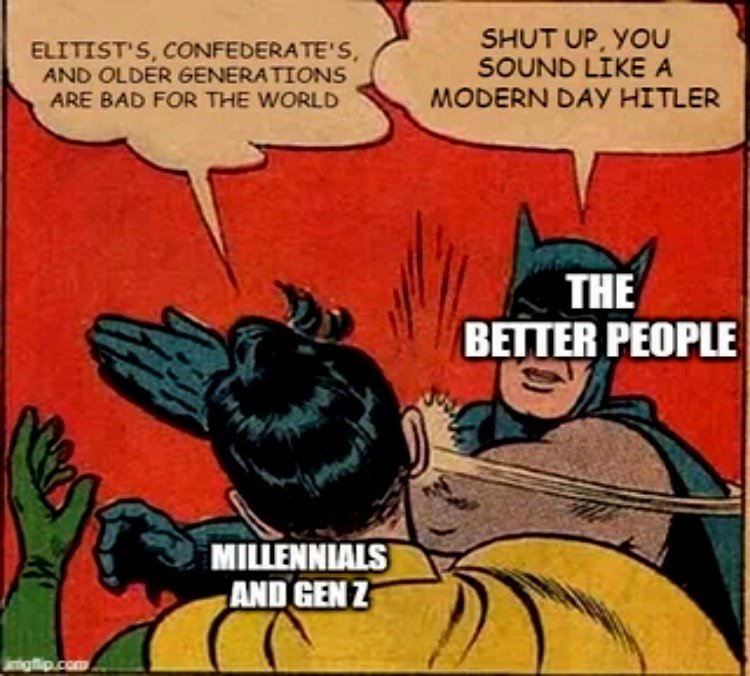
Social media has recently been flooded with memes, headlines, and heated discussions claiming that Gen Z is expressing support for Hitler and the idea of authoritarian power. After encountering such narratives in international outlets like The Daily Mail and The Jewish Chronicle, the question became impossible to ignore.
This article takes a closer look at those claims—separating noise from nuance, outrage from evidence. Are members of Gen Z truly leaning toward violence and extremist ideology, or is this yet another case of fragmented data, sensational headlines, and viral propaganda distorting reality?
The Claim
In recent months, a claim spread on social media that about 22 % of Generation Z praised Adolf Hitler in a survey. At first glance, that sounds shocking and even frightening. But when we look more closely at what the poll actually asked and what the experts say, the reality is more nuanced and less dramatic than the headlines suggested.

The original poll was conducted in the United States by YouGov in late October and early November 2024. It asked around 1,000 adults about their views on Adolf Hitler and included several different questions, not just one.
One question asked people whether Hitler was a completely good person, a bad person, or something in between. Only 1 % of respondents said they thought Hitler was a completely good person. Another small group, about 4 %, said he was “a good person who did some bad things.” Most people — about 65 % — called him completely bad, and others were unsure.
 Another part of the poll asked whether people thought any of Hitler’s ideas were right. In that question, about 11 % said yes, while 65 % said no and the rest were not sure.
So where did the idea of “22 % praising Hitler” come from? It seems to come from another question in the same poll that was not directly about whether Hitler’s ideas were good or bad, but whether people would still vote for a political candidate they support if that candidate said Hitler did some good things. In that unrelated question, about 24 % said yes they would still vote for such a candidate.
The important lesson here is that poll questions matter a lot. The number that was shared on social media doesn’t directly show how many young people support Hitler or his cruel beliefs. It reflects mixed responses to different survey questions, and when the full context is included, the picture changes.
Still, the very fact that a portion of young adults can respond ambiguously to questions about one of history’s most evil dictators points to something deeper. Many experts say that historical understanding is fading as time passes, and that education, media, and how young people learn about the past all influence how they respond to complex questions like this. It’s not necessarily that Generation Z is more aggressive or power-hungry — but that many might not fully grasp the horrors of history, or they interpret survey words differently.
Instead of rushing to judgment, this is a chance to reflect on how we talk about history, how we teach it, and how we help young people connect with the realities — both terrible and important — of the past. Learning honestly and compassionately helps build a wiser future.

Gen Z Press delivers trusted and timely global news for the new generation. We bring you world updates, Gen Z trends, entertainment, lifestyle, and digital culture with clarity, simplicity, and accuracy. Stay informed, inspired, and connected with Gen Z Press — your reliable destination for global news and youth-driven stories.
We welcome your opinions at ✉️ letters@genzpress.com