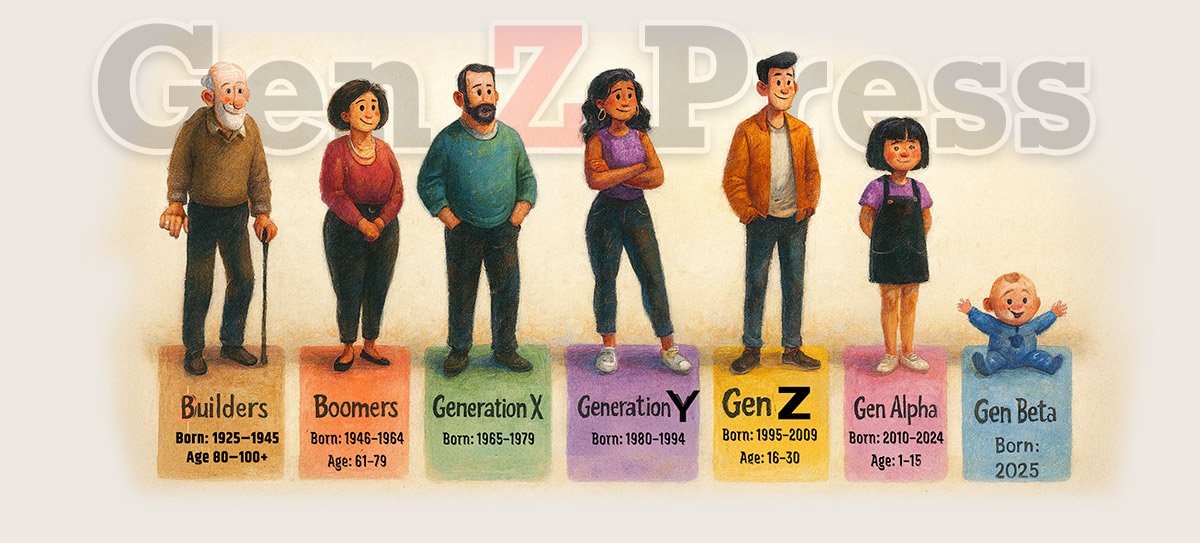






The Gen Z Paradox:
Generation Z (born between 1997 and 2012) stands at a curious crossroads. They are often defined by a stark and surprising contradiction: they are simultaneously highly accomplished in certain intellectual and technical areas, yet surprisingly emotionally fragile and unequipped in others. This phenomenon, often dubbed the Gen Z Paradox, describes a generation that is “growing up lost”.
For example, a Gen Z individual might be capable of presenting compelling scientific arguments on climate change, launching a startup directly from their bedroom, or trading stocks effortlessly via a mobile application. However, this same high-achieving individual might falter when attempting to express their emotions or navigate a romantic conflict. How can a generation be so cognitively mature yet struggle profoundly with basic emotional navigation?
Accelerated Cognitive Maturity: The Rise of the Informed
Instant access to information has fundamentally reshaped Generation Z. Today’s youth are exposed to vast amounts of knowledge earlier than any preceding generation. By the age of 15, many members of Gen Z possess a better understanding of complex topics, such as global economics, than their parents did at age 30.
Their constant engagement with social media keeps them deeply involved in political discussions and rapid technological advancements, cultivating sharp decision-making skills and an elevated sense of responsibility. The sources note that Gen Z and Gen Alpha (1997 and beyond) are collectively the most informed generation in history, even while exhibiting emotional hesitancy.
This accelerated cognitive timeline contrasts sharply with previous generations:
- Boomers (1946–1964): Often married around age 20 but entered adulthood with significantly less world knowledge.
- Gen X (1965–1980): Generally gained independence and started taking on responsibilities gradually around age 25.
- Gen Y (Millennials) (1981–1996): Tended to delay serious life commitments until they reached their 30s.
The Delayed Emotional Maturity
Despite their excellence in reasoning and project management, members of Gen Z often find themselves struggling to navigate complex human relationships. The sources point to two primary societal factors contributing to this emotional lag: the proliferation of screens and an increasingly overprotective modern life.
Screens as Emotional Barriers
Paradoxically, young people today are more connected than ever, yet they have fewer real-life interactions that necessitate genuine emotional engagement. Digital screens act as emotional barriers, reducing the essential need to read body language and avoid uncomfortable, face-to-face conversations.
While Gen Z is fluent in expressing feelings through emojis and digital shorthand, the question remains whether they still possess the ability to grasp the nuance conveyed through non-verbal cues, such as the full meaning of a worried glance or the depth communicated during an awkward silence. This limited exposure to deep, real-time connection makes it more challenging for them to build meaningful emotional bonds and develop effective conflict resolution skills.
The Role of Societal Overprotection
Modern society tends to prioritize absolute safety and instant gratification. In contrast, previous generations frequently encountered key life experiences early on, such as starting a job, serving in the military, or taking on significant family responsibilities.
Today’s youth, however, are increasingly insulated and shielded from life’s inevitable challenges. This prolonged protection limits their exposure to formative lessons learned through frustration, rejection, and the essential development of patience. Furthermore, being accustomed to “opinion bubbles” on social media and relying heavily on digital communication causes many young people to actively avoid face-to-face confrontations. Emotional maturity, however, grows precisely through conflict, mistakes, and the necessary process of reconciliation. Without these difficult experiences, the sources ask, how can this generation learn how to love, forgive, or negotiate effectively?
The +5 / -5 Phenomenon: A Generation Out of Balance
To quantify this observed imbalance, the sources introduce the concept of the +5 / -5 phenomenon. This suggests that, compared to prior generations, Gen Z exhibits +5 years of cognitive maturity but -5 years of emotional maturity.
This gap creates a unique challenge: this generation possesses hyper-intellectual development coupled with emotional fragility. The fundamental difficulty lies in how one can be expected to make complex, high-stakes decisions when they struggle profoundly to manage their own personal emotions.
Strategies for Rebalancing the Scale
Addressing this paradox requires a focused effort across education, family life, and professional settings. The goal is to nurture the intellect while simultaneously relearning how to be human.
Three core strategies are necessary to rebalance the scale:
- Learning to Be Uncomfortable: Young people must be actively encouraged to step away from screens and confront genuine emotions. This means seeking out and embracing real-life interactions, even if they are difficult or awkward.
- Reintroducing Formative Life Experiences: It is crucial to give young people responsibilities early on through real-world commitments and challenges. This provides the experience necessary for interpersonal development.
- Valuing Emotional Intelligence (EQ) as Much as Analytical Intelligence (IQ): Educational systems must integrate courses on emotional management and interpersonal relationships into their curricula.
Why This Imbalance Matters to Professionals
Understanding the gap between cognitive and emotional maturity is critical for all stakeholders who work directly with young generations, including educators, employers, and mental health professionals.
- For Educators: Schools must integrate emotional intelligence into the curriculum to ensure students develop essential resilience and communication skills alongside technical knowledge.
- For Employers: Companies need to rethink their training and mentorship approaches for younger employees. They must invest in programs that emphasize soft skills and emotional resilience workshops, alongside technical expertise.
- For Mental Health Professionals: The documented rise in anxiety and emotional struggles among Gen Z and Gen Alpha signals a need for new therapeutic approaches specifically tailored to address their digital realities and unique challenges.
Redefining the Future
Generation Z holds immense potential; they could become the most brilliant and innovative generation in history. However, they also face the significant risk of struggling due to an increasing inability to manage their emotions effectively. The future belongs to those who successfully learn to combine their inherent cognitive power with a newly cultivated emotional depth.
The challenge of combining a hyper-informed mind with a hesitant heart is like having a powerful engine but no steering wheel; the potential for speed and distance is massive, but without emotional navigation skills, the journey is directionless and dangerous.
(Note: Insights regarding the ‘Peter Pan Paradox,’ ‘Monk Mode,’ and ‘The Great Lock-In’ suggest that Gen Z is actively seeking self-discipline and calm, further emphasizing their internal struggle to define adulthood and manage chaos.)

Gen Z Press delivers trusted and timely global news for the new generation. We bring you world updates, Gen Z trends, entertainment, lifestyle, and digital culture with clarity, simplicity, and accuracy. Stay informed, inspired, and connected with Gen Z Press — your reliable destination for global news and youth-driven stories.
We welcome your opinions at ✉️ letters@genzpress.com